LiteratureDecision Files
We bridge the gap between complex research archives and clear, action-driven literature choices. Our platform uses structured, transparent analysis to evaluate the credibility, methodology, and relevance of academic sources.
In an era of information overload, researchers, academics, and decision-makers face a critical challenge: distinguishing high-integrity scientific publications from low-quality or biased research. Our scoring models dissect literature methodologies step-by-step, ensuring every source is scrutinized under objective rules.
Decision-Making Simulator
Interact with our core evaluation variables below to understand how the scoring engine weights and rates a scientific document in real-time.
A+ EXCELLENT
Platform Pipeline & Criteria
Every journal entry, dissertation, and whitepaper passing through our database is analyzed against strict criteria mapped over three fundamental pillars.
How We Evaluate Credibility
Credibility assessment measures standard bibliographic credentials. Our pipeline checks index databases, citation weights, publishing body track records, and peer review history. Rather than accepting journal credentials at face value, our engine analyzes real post-publication commentary and corrections.
- Database indexing checking (PubMed, Scopus, Web of Science)
- Track record evaluation of principal researchers and co-authors
- Comprehensive cross-reference and citation network integrity testing
Replicability Verification
A scientific source is only as strong as its raw data structure. We dissect the statistical methodologies, validating sample sizes, control groups, cohort configurations, and mathematical formulas applied within the study.
- Methodology details verification (open-source code, scripts)
- Verification of original sample dimensions & margin of error
- Scrutiny of assumptions and statistical confidence indices
Bias & Conflict of Interest Checks
Financial, institutional, and research-specific biases can lead to compromised scientific outcomes. LiteratureDecision Files highlights institutional sponsorships, research grant patterns, and corporate backing to maintain absolute neutrality.
- Mapping funding agencies against known commercial interests
- Checking for systematic confirmation biases in study design
- Flagging undeclared organizational affiliations of key authors
Data-First Architecture
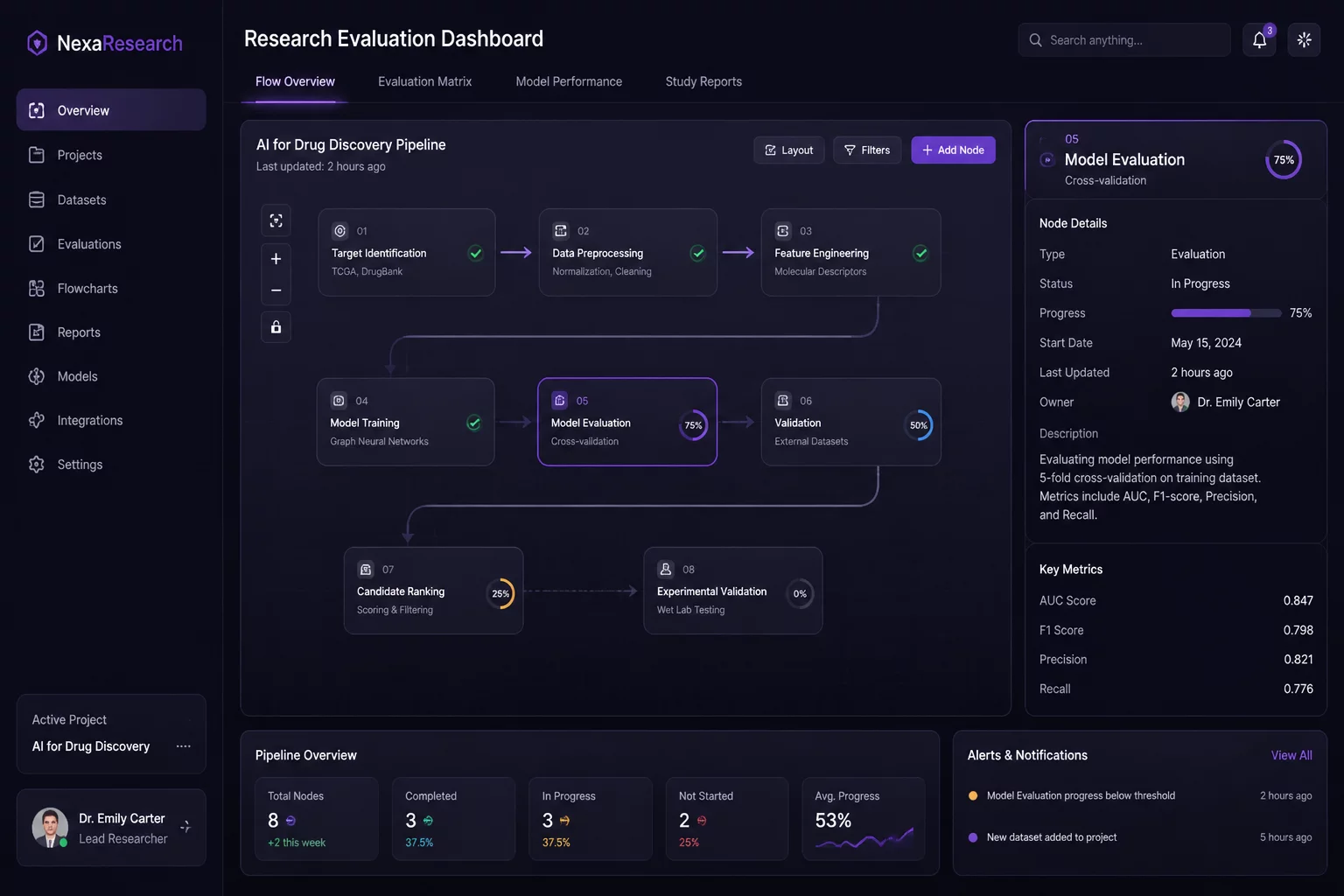
Behind every recommendation is a high-speed data parser designed for academic formats. We process metadata structures, index citation loops, and cross-reference citations dynamically. The platform offers structural summaries, citation counts, and clear quality flags that enable you to prioritize peer-approved information and discard unreliable research material.
Fast Analysis
Extract and process primary literature indices within seconds.
Granular Filters
Fine-tune your scientific search query parameters with ease.