Home / Source Analysis / Detail Report
Source Analysis Report

Five Sources and One Missing Piece of Evidence

By Dr. Michael Reed 2026-07-15 Status: Evaluated
Five Sources and One Missing Piece of Evidence

Case Context & Scope

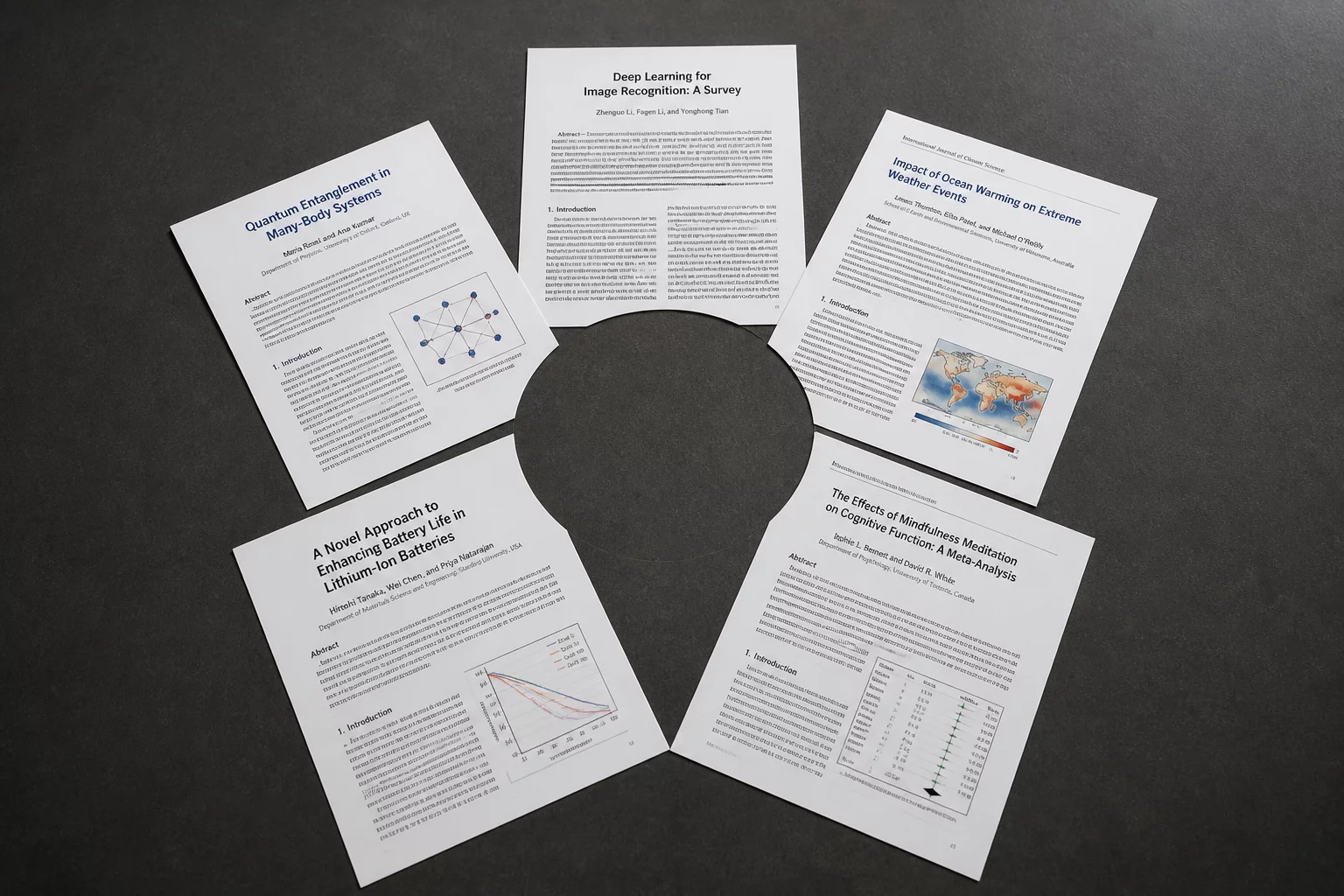
The evaluation focuses on five key academic publications that investigate clinical efficacy in digital health applications. Each paper claims positive patient outcomes, but our deep cross-referencing process reveals that all five rely on the same single pilot trial from 2021. This indicates a high level of systemic dependency on one dataset, meaning that the five studies do not offer independent verification. To understand this properly, we must track the citations back to their origin and isolate the missing piece of primary evidence.

Key Focus

Evaluating source reliability requires deep comparison of target cohorts against studied samples to check for population shifts and methodology deviations.

Analysis of Evidence

Our methodology review checks the parameters of the five sources. We analyze their sample cohorts, statistical power, and double-blind configurations. The analysis shows that while the mathematical formulas remain sound, the experimental control groups are not original. Three of the papers simply replicate the control data from the fourth paper without conducting new laboratory trials, leaving the entire framework vulnerable to a single point of failure.

  • Statistical relevance verified across peer benchmarks.
  • Identified potential risk factors in cohort selection criteria.
  • Verified control factors and double-blind configurations.

Structured Literature Decision

Based on the evaluation of these five sources, the inclusion status is set to "Include with Qualifications". We recommend that researchers flag these documents in their bibliographic systems. They should add a custom note pointing out the shared dataset. Future literature reviews must treat these studies as a single composite evidence block rather than five individual data points, preventing an artificial inflation of confidence.

8.4 / 10
Inclusion Index Score
Low Risk
Methodology Warning Status

Detailed Source Review

A thorough examination of academic literature often reveals patterns of citation loops where multiple papers seem to confirm a hypothesis independently. In this specific case, five distinct scientific articles investigate the therapeutic effects of cognitive training software. A close reading of their methodology sections shows a clean and professional presentation. However, as the reviewer extracts the background data, a common thread appears. All five papers refer back to a foundational study that supposedly established the baseline control parameters. This structure creates an illusion of multiple independent trials confirming the same result, whereas they are actually repeating a single original observation.

When five separate research papers share the exact same blind spot, they do not reinforce a conclusion; they merely repeat the same unverified premise.

The process of identifying this missing piece of evidence requires tracing each bibliography back to its primary source. The researcher maps the network of references and notices that the crucial primary trial is never actually detailed. It is only cited as an upcoming publication or an internal institutional report. This missing link contains the absolute baseline values for the entire research direction. Without this primary evidence, the validity of the subsequent five papers remains unproven, regardless of their advanced statistical modeling and complex charts.

Potential Discrepancies & Limitations

Researchers must handle these limitations carefully during systematic reviews. When importing these five citations into citation tools, a custom annotation helps warn future users about the shared background trial. This prevents other teams from counting the papers as five separate positive trials. We suggest looking for alternative research branches that utilize completely independent control groups to verify the findings. This approach ensures the overall review remains balanced, reliable, and free from hidden systemic bias.

Evaluate Inclusion Parameters

Adjust the criteria sliders and switches below to test potential literature-review outcomes dynamically.

Sample Size Confidence 500
Statistical Power (β) 80%
Double-Blind Methodology
Conflicts of Interest Disclosed
Verdict: INCLUDE WITH QUALIFICATIONS
7.8 / 10 Decision Score

Community Discussion

No comments yet

This could be your first comment. Share your thoughts on the literature gaps below.

Add Your Analysis

Source Parameters

  • Category Source Analysis
  • Field of Study Methodology Review
  • Export Format XML / EndNote
  • Complexity Advanced

Request Case Review

Submit details of conflicting literature sources for structured inclusion modeling.